In just three months, the State of Cameroon has been ordered by three international courts to pay 446 billion FCFA (nearly 700 million euros) to foreign companies. A bill that, according to political and civil society leaders, reveals a deep governance crisis.
This is an unprecedented financial hemorrhage. Three judicial defeats, 446 billion. The first dates back to July 2026. It orders Cameroon to pay 353 billion FCFA in the Sundance case. Indeed, Cameroon is ordered to pay 353 billion FCFA to the Australian mining company Sundance Resources. The cause: the Mbalam-Nabeba iron project on the border with Congo, managed in a contentious manner.
Read more Securing the CAR: Cameroon sends its 13th contingent to Minusca
The second blow came in early September 2026: 51 billion FCFA to pay in the Piccini case. ICSID (International Centre for Settlement of Investment Disputes) orders Yaoundé to pay 51 billion FCFA (78.5 M€) to the Italian Gruppo Officine Piccini for illegal expropriation on the Olembé stadium construction site, unilaterally terminated by the State in 2019.
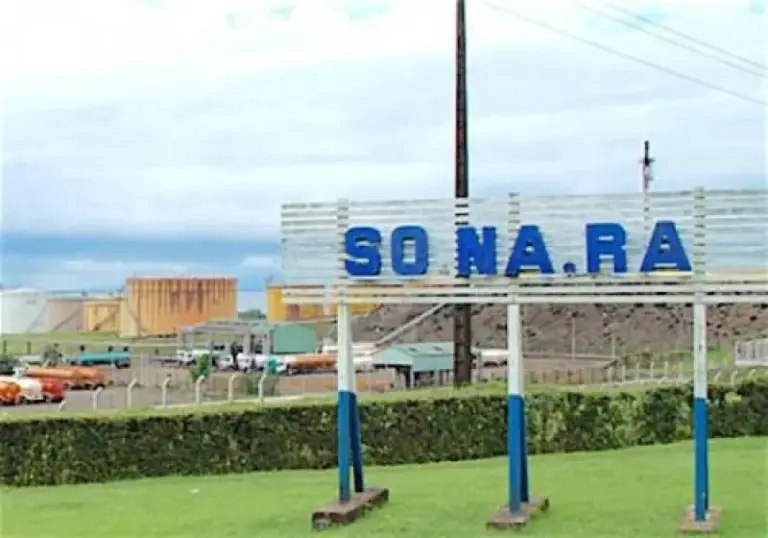
The last case was resolved in September 2026: 42.8 billion FCFA to pay in the Sonara case. As a final blow against the country, Sonara lost its last appeal in the UK against Nigerian Sahara Energy. 42.8 billion FCFA (75 million dollars) to pay for crude oil shipments purchased between 2013 and 2016, delivered and consumed but never fully paid. It is the interest and exchange losses that caused the bill to explode due to delays.
In total, Cameroon is ordered to disburse 446.8 billion FCFA
Incompetence on the defendant’s bench
For observers, this is not an accident but a system. Joseph Espoir Biyong, political leader, is scathing in an opinion piece: “These condemnations reveal governance by incompetence, contempt, and impunity. It is a fault that costs schools, hospitals, and roads to ourselves and our children.”
Economist Serge Alain Godong, quoted by RFI, speaks of a complete mismatch with global standards. “Cameroonian leaders have a very flawed alignment with everything that governs the world order in terms of standards, practices, and respect for commitments. It is not surprising that we end up with judicial rulings unfavorable to the State.” And with Sonara’s treasury considered fragile, it is the Ministry of Finance that will have to pay, he specifies.
Read more Academic Palms 2026: 1,610 files on the National Council’s table
Oil expert Robert Mouthe Ambassa points to technical incompetence: “Those responsible for the case did not master the financial mechanisms specific to the oil sector, where each delay mechanically increases interest. An inertia incompatible with the responsiveness requirements of this environment.”
A country under tension and a worrying silence
These 446 billion come at the worst time. Cameroon is still under an IMF program, with public debt at 46% of GDP and public finances under strain. Worse: the bill could still rise. Other disputes are pending, notably with the Canadian Magil Construction, also linked to the Olembé fiasco.
Faced with all this, the government’s silence is total. No official communication on payment terms or lessons to be learned. In all three cases, no public statement has been made.
An accumulation that raises a broader question than isolated disputes: that of the Cameroonian administration’s ability to honor its contractual commitments on time, and to anticipate the multiplied cost of a simple delay.
Read more Port fluvial de Garoua: the time for action has come