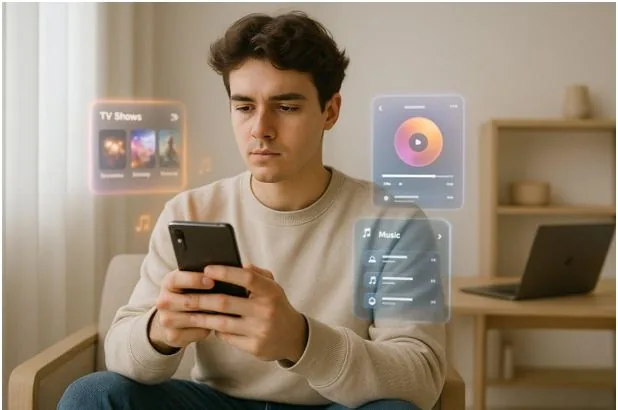
Discover how new generations prioritize online entertainment: streaming, social networks, video games, and their impacts.
The digital habits of the French have profoundly evolved. Entertainment once dominated by television has shifted to increasingly diverse online platforms. With streaming, social networks, and interactive games, our ways of entertaining ourselves are fragmenting and becoming more individualized. Discover how online casinos outside Belgium and other digital activities are redefining daily pleasure for Generation Z and young French adults.
Read more Decentralization: ARC and CVUC seal a historic partnership in Garoua
The Digital Transformation of Leisure Habits
Our relationship with entertainment has undergone a silent but profound revolution over the past decade. Young people aged 15 to 24 spend between 3h50 and more than 4h per day on the Internet, mostly via smartphone. This is no longer anecdotal; it has become the norm.
In the past, people came home to watch television with family. Today, our leisure is experienced constantly, on all screens, online. Digital has established itself as the main way to consume series, movies, music, games, and even reading. This evolution also concerns online gaming practices, with searches like “casino without ID” illustrating some internet users’ interest in entertainment experiences accessible directly from their devices.
New generations prioritize online entertainment, not exclusively by choice, but because it fits their lifestyle, their need for immediate access and personalization. It is a structural change, not a mere trend.
The Dominant Platforms of Youth Entertainment
Social Networks and Short Content
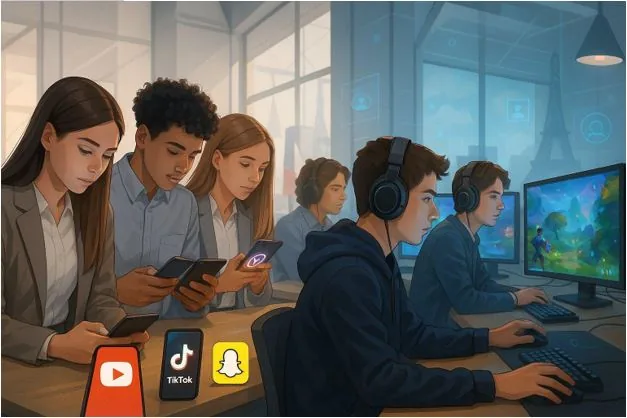
Social networks and messaging apps account for about 60% of young people’s browsing time. YouTube, TikTok, Instagram, Snapchat, and WhatsApp completely dominate content consumption and communication. These platforms are not just places for socializing: they have become the backbone of contemporary entertainment.
Young people watch more than 5h21 of videos per day, especially short formats. Short videos on TikTok and Instagram Reels generate the highest audiences and the most intense engagement. This preference for ephemeral and fast content reflects our always connected, always moving society. New content creators know this well: capture attention in three seconds or lose your audience.
Video Games and Immersive Experiences
Video games have established themselves as a major passion. Nearly 7 out of 10 French people play monthly, with strong participation among 15-24 year olds. About 34% of teenagers play daily, and 22% play at least 4 hours on the days they connect.
These games are not just isolated entertainments. Online games and platforms like Roblox also serve social purposes. Fortnite, League of Legends, and Among Us offer immersive experiences where young people connect with friends and strangers worldwide, creating dynamic virtual communities. It is a modern form of leisure where interaction takes precedence over passive consumption.
The Advantages of Online Entertainment
Online entertainment offers tangible benefits that our parents did not have. First, expanded access: cultural and educational content available without geographical or time limits. You can watch a Korean series at midnight, learn to code on YouTube, or discover an emerging artist on TikTok.
Read more International Day of Peace: Cameroon focuses on dialogue to invest in daily peace
Next, personalization. Algorithms learn our tastes and suggest what we really like, not what a schedule decides. There is also interactivity: we are no longer mere spectators but active participants. We comment, share, create. Young people can post their videos, form gaming clans, participate in live challenges. It is more than entertainment; it is a form of personal expression and social connection.
Challenges and Issues for New Generations
This digital revolution is not without risks. The intensity of use raises questions: more than 4 hours per day on screens is considerable, especially at an age when the brain is still developing. Mental health professionals warn about the risks related to this prolonged exposure.
There is also the possible addiction to social platforms and online games. Algorithms are designed to keep us connected, captivated, engaged. They play with our psychology. For teenagers, whose critical thinking is still developing, it is a complex environment to navigate.
Finally, privacy, data, and manipulation issues must not be forgotten. Young people grow up in a world where their data is worth gold, where information bubbles influence their ways of thinking. Understanding these issues and developing more conscious digital consumption becomes essential for a healthy relationship with online entertainment.
Conclusion
Online entertainment has firmly established itself in the daily lives of new generations. Streaming, social networks, video games, and short content now offer instant access to a multitude of experiences, while allowing personalization of leisure and staying connected with others. For Generation Z and young adults, digital is no longer just a means to consume entertainment: it constitutes a true space for discovery, expression, and socialization.
This evolution brings many possibilities but also requires new habits. Faced with screen time, recommendation mechanisms, and issues related to personal data, adopting a balanced and conscious use of platforms becomes essential. The goal is not to give up digital entertainment but to find a balance between pleasure, online interaction, and offline activities.
As technologies evolve, forms of entertainment will undoubtedly continue to diversify. New generations are already actively participating in this transformation by moving from the role of spectator to that of creator and participant. Tomorrow’s entertainment will thus be increasingly interactive, personalized, and connected, while making digital usage mastery a central issue.
Read more Traditional Pharmacopoeia: MINRESI Makes Made in Cameroon a Lever of Health Sovereignty