On July 7, 2026, the National School of Local Administration (NASLA) and the European Union reaffirmed their commitment to strengthening decentralization in Cameroon during a working session with the leaders of the Local Development Support Program (PADL), funded by the EU. At the center of the discussions: three priorities for Decentralized Territorial Collectivities (CTD) – adaptation to climate change, digital transformation, and financing decentralization.
Read more Cameroon: Phase 1 of the modernization works of Douala Airport has started
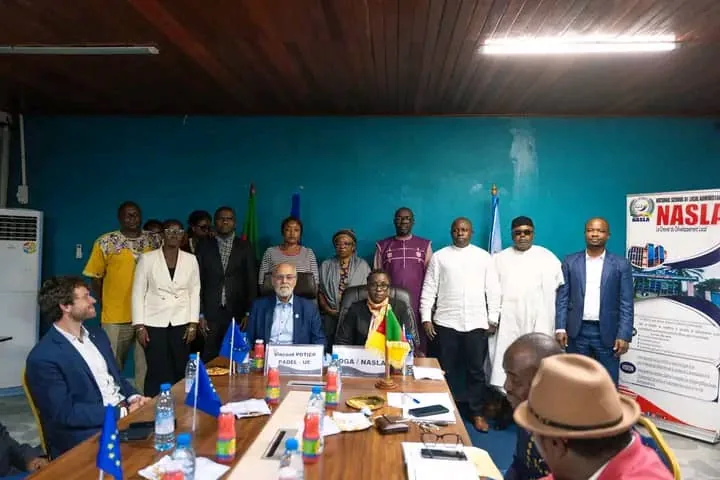
The partnership between Cameroon and the European Union in local governance is reaching a new stage. On Tuesday, July 7, 2026, the National School of Local Administration (NASLA) welcomed Vincent Potier, team leader of the technical assistance for the Local Development Support Program (PADL), a mechanism funded by the European Union to support the implementation of the decentralization process in Cameroon.
Hosted by the Deputy Director General of NASLA, the PADL official took part in a working session dedicated to the main challenges faced by Decentralized Territorial Collectivities. This meeting allowed for examining the levers likely to improve local governance and strengthen the capacities of territorial administrations in a context marked by increasing demands for sustainable development.
The discussions highlighted three strategic areas for the future of the collectivities. The first concerns adaptation to climate change, which has become a necessity for territories facing increasing environmental risks. The second focuses on the digital transformation of local administrations, considered a key factor in modernizing public services and improving the quality of services offered to citizens. Finally, the issue of financing decentralization emerged as a central challenge to enable collectivities to have the necessary resources to effectively exercise their powers.
Beyond technical aspects, this meeting reflects the shared will of Cameroonian authorities and the European Union to consolidate more efficient territorial governance. By supporting PADL, the European Union accompanies the reforms undertaken by Cameroon to strengthen the institutional capacities of local collectivities and promote more balanced territorial development.
For NASLA, an institution responsible for training local administration executives, this cooperation represents an important lever to adapt the skills of future territorial managers to the new requirements of decentralization. The growing importance of climate issues, digitalization, and public resource management indeed requires continuous evolution of the profiles and skills of local actors.
This visit is thus part of a dynamic of sustainable partnership between national institutions and technical and financial partners. It illustrates the convergence of efforts aimed at building more resilient, more innovative territorial collectivities better prepared to meet the expectations of the populations.
By reaffirming its desire to strengthen its strategic partnerships, NASLA confirms its role as a key player in the professionalization of local administrations and in supporting decentralization public policies, a project considered crucial for improving governance and accelerating the economic and social development of Cameroonian territories.
If you wish, I can
Read more Repatriation of cultural property: the government calls for consultation