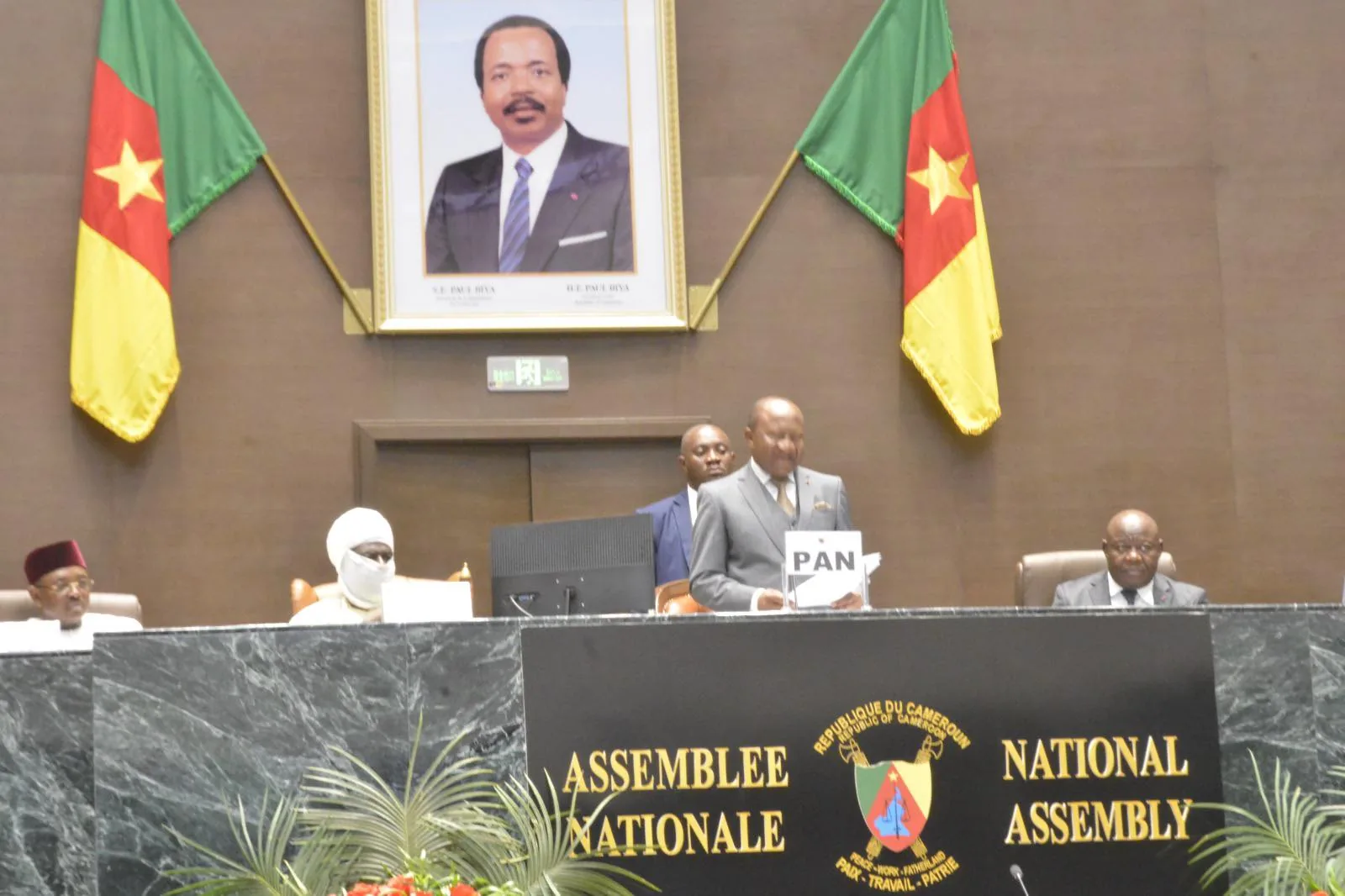
Guibai Gatama, editor-in-chief of the daily l’Œil du Sahel, questions the effectiveness of the National Assembly’s action for the nation. In a recent publication, he proposes to review the duration of parliamentary sessions in Cameroon.
“What is the use of a National Assembly disconnected from the daily life of the nation?” wonders the editor-in-chief of l’Œil du Sahel at the beginning of his publication dated July 19. Three sessions of 30 days per year; barely 15 days per session devoted to voting on laws and controlling government action; that is a month and a half of parliamentary debates per year.
Read more Electricity in Cameroon: an innovative approach to sustainably electrify rural areas
This raises a series of questions from the author of the publication. He also wonders: “How, under these conditions, can the National Assembly fully carry out its mission (…) at the pace of the country’s challenges and continuously represent the daily concerns of the people?”
The political activist is convinced that a little more time granted to parliamentarians would be enough for them to get closer to the daily realities of the nation in their parliamentary work. To this end, he advocates for almost annual sessions, taking examples from other African countries: about one year of session in neighboring Chad, nearly eight and a half months of session in Côte d’Ivoire, about nine months in Senegal, or practically the whole year in Nigeria.
The 30-day duration in Cameroon Constituting a concern for him, the man intends to direct reflections on the duration of parliamentary sessions in Cameroon. The goal being to give more time to elected officials in order to strengthen the control of public action. And to bring national representation closer to the daily concerns of the nation.
If the duration of sessions is a concern for Guibai Gatama, it would not be the only one. Another concern related to the effectiveness of parliamentary work relates to its political composition. The National Assembly, composed mostly of RDPC deputies, does not promote balanced debate on issues concerning the nation’s concerns. The majority being from the ruling party, aligns with the executive’s policy to the detriment of certain issues that concern the people. The silence on the five bills introduced by the SDF during the March parliamentary session is an illustration.
Read more Female leadership: 19 civil society actresses now better equipped to take action