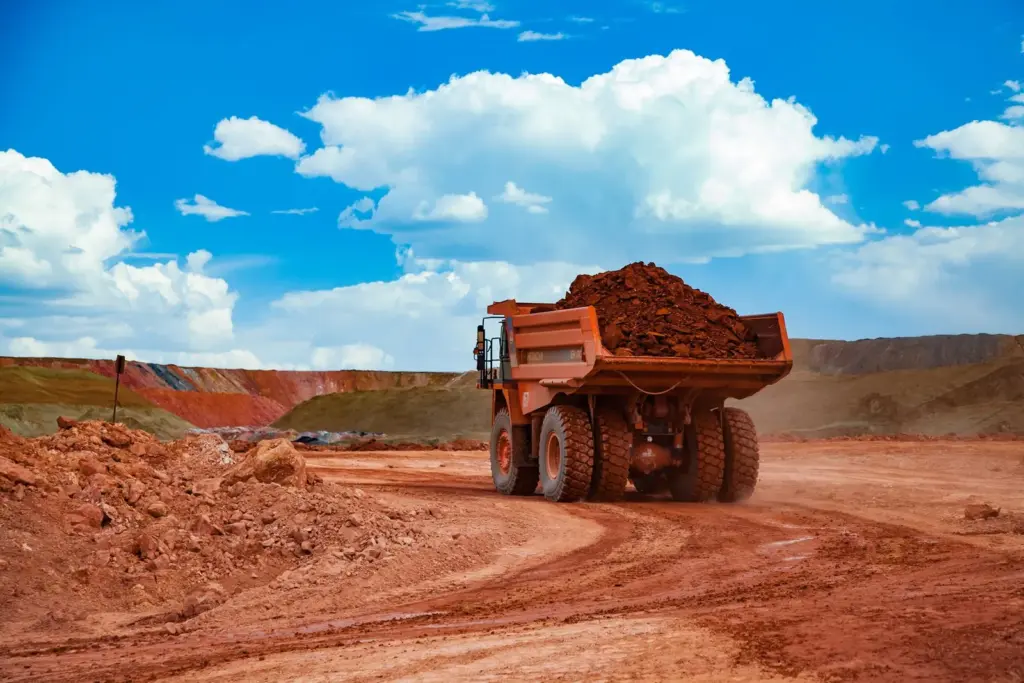
The saga around the main Cameroonian bauxite deposit Minim Martap continues. On Friday, September 11, A2MP Investments provided new details in response to Canyon Resources, which still recommends its shareholders to reject its buyout offer. A look back at the stakes of this showdown for control of what should become Cameroon’s first industrial bauxite mine.
A major project slowed by a disagreement between shareholders
Until a few months ago, the Cameroonian press presented Minim Martap as one of the country’s most promising mining projects, with a first bauxite export announced for this year. At the end of July, the pan-African mining platform A2MP (holding 55.56% of Canyon) surprised by proposing to acquire the remaining capital at a price of 0.05 AUD per share as part of an off-market public offer.
It all starts with a disagreement over the project’s value. According to an expert report commissioned by Canyon, A2MP’s offer undervalues the project, notably by neglecting bauxite reserves that would remain exploitable beyond the first twenty years. A2MP disputes this calculation: the mining permit expires in 2044, and the estimate of Canyon’s share in the project itself has varied greatly in a few months, dropping from about 80 to 27 million Australian dollars.
In February 2026, the independent expert valued Canyon Resources’ stake in the project between 45 and 115 million Australian dollars, with 80 million as the most probable estimate. This value is only 27 million six months later. For A2MP, this variation illustrates the limits of a valuation it considers particularly sensitive to the assumptions made.
Another disagreement between the two parties: Canyon now estimates the project’s value at 538 million dollars, up from 521 million previously, an increase of 17 million. For A2MP, however, this increase does not reflect a real improvement in the project. It would mainly be explained by the change in the period taken into account in the calculation. Using a comparable method, this value would have actually decreased by about 33 million dollars.
In a communication made public on September 11, A2MP states that its offer of 0.05 Australian dollars per share is final and will not be revalued in the absence of a competing counter-offer. The Pan-African group confirms at the same time that its offer will not be extended beyond September 21 at 7 p.m. A2MP finally indicates that it now holds, together with its partners, a 56.63% interest in Canyon’s capital. The group, already the largest shareholder of Canyon, reiterates its intention to continue playing a constructive role in the company’s future, whatever the outcome of the offer.
However, this showdown goes beyond the financial question alone. For Cameroon, Minim Martap represents the country’s entry into bauxite production, with thousands of jobs and significant mining revenues expected for several years. Each month of blockage delays this prospect. Wouldn’t a shareholder with both financial means and industrial experience have a better chance of finally getting it off the ground?
Read more Economic recovery: GECAM sounds the alarm
A2MP, the expertise of a pan-African heavyweight
Present in nine African countries, the pan-African platform A2MP combines both extraction and local processing of critical minerals such as gold, bauxite, manganese, and iron ore. The platform claims a portfolio of about ten mining assets and four processing hubs. This unique model on the continent has received support from FEDA, the investment arm of Afreximbank, which has committed 300 million dollars to accelerate its deployment, praising a model capable of retaining more value on the continent.
On the ground, A2MP claims its ability to quickly advance large-scale projects. In Sierra Leone, FG Gold, in which A2MP holds nearly half the capital, is developing the Baomahun gold project, one of the largest on the continent with 5.81 million ounces of resources. The country’s first large-scale commercial gold mine is expected to create up to 900 direct and indirect jobs and account for 10% of the national GDP. In Gabon, Nouvelle Gabon Mining, another portfolio company, operates two manganese mines with a capacity of 2 million tons per year.
Faced with a project accumulating delays, the question posed to Canyon’s shareholders goes beyond the price offered: it also concerns each party’s ability to bring the Minim Martap project to fruition. For Cameroon, which needs reliable partners to realize its strategic mining projects, a quick resolution of the dispute remains the condition to transform this deposit into jobs and revenues.
Unlike a purely financial shareholder, A2MP can mobilize both international capital, proven pan-African expertise, and strong institutional support, as shown by Afreximbank’s backing.
It remains to be confirmed whether the company will succeed in winning this ambitious bet and convincing the majority of shareholders of its ability to revive this key project for Cameroon’s future.