Last year, across Africa, the number of people who doubted their ability to obtain adequate food or were forced to reduce the quality and quantity of their food decreased. For the first time in ten years, the food insecurity situation improved across the continent. The proportion of the population suffering from hunger declined for the first time in nearly ten years, from 20.3 percent in 2024 to 20 percent in 2025. The prevalence of moderate or severe food insecurity decreased from 58.5 to 56.6 percent, representing 8.6 million fewer people. The prevalence of severe food insecurity also decreased. Cases of stunting in children are regressing. Hunger, which had been on the rise on the continent since 2017, even seems to have stopped gaining ground.
Read more Cameroon: over 44 tons of gold smuggled, estimated tax losses of 577 billion
This change, though modest, could be a real turning point. After a decade marked by a deteriorating situation, Africa has shown that the architecture underpinning food security can work. To preserve this progress, a second change of course will be necessary: it will be necessary to go beyond merely reducing hunger and make nutritious food accessible to everyone. Investments in institutions, infrastructure, and markets, as well as budgetary choices, influence prices long before food reaches households.
For twenty years, a small group of African countries has been building the components of this architecture: agricultural research and extension services, veterinary networks, rural roads and market links, and statistical agencies that measure deprivation through household surveys. These achievements have been made even as it became increasingly difficult to rely on external funding. Aid remains essential, particularly in conflict-affected countries, where it helps populations survive.
However, in the current context, national capacities, more judicious public spending, and resilient supply chains are becoming increasingly important. How governments will now mobilize these instruments to influence the cost of healthy food will determine whether 2025 opens a new era of sustainable progress or remains a fleeting improvement.
Africa still faces a greater food security challenge than any other region. The continent has 309 million people suffering from hunger, more than any other region in the world, and by 2030, it will be home to 56 percent of all people who will still face hunger globally. Two out of three Africans cannot afford a healthy diet, and this proportion continues to increase, while it decreases in other regions of the world.
Yet, this progress is based on national results achieved over time. Over the past two decades, Senegal has reduced the proportion of its population suffering from hunger from 15.8 to 5.3 percent. In Togo, this proportion decreased from 24.6 to 10.2 percent; in Ghana, from 11.1 to 6.4 percent; in Côte d’Ivoire, from 17.6 to 11.4 percent; in Rwanda, from 31.8 to 22.6 percent; and in Mozambique, from 29.2 to 22.3 percent, all these countries having stayed the course despite price crises and the pandemic. Progress of such magnitude is the result of public policies, not weather conditions.
Making healthy food affordable will be more difficult than reducing hunger. The obstacle lies in the price of foods that make up a healthy, rather than simply filling, diet: milk, eggs, fish, meat, fruits, vegetables, and legumes. Animal-source foods constitute the most significant cost group in Africa, and 69 percent of African countries fall into the highest cost tercile globally for this category, while basic starches represent only a relatively small portion of the total cost of a healthy diet.
These prices are formed link by link, under the effect of animal diseases, insufficient cold chains, failing road networks, high energy costs, and underdeveloped local markets, long before products reach the shelves. The price of staple foods has steadily decreased, while that of many of the most important foods remains stubbornly high.
African governments can finance much of this transition by reorienting the subsidies they already provide. In Africa, a general 10 percent production subsidy reduces the cost of a healthy diet by about 4 percent, roughly half of what the same amount achieves in Latin America: the issue is therefore more about the allocation of these budgets than their amount. If they are directed towards animal health, breeding and aquaculture, cold chains, rural roads and cheaper energy, as well as research on fruits, vegetables and legumes essential for any healthy diet, the cost structure that keeps healthy food out of reach for two out of three Africans will begin to change.
African systems are not yet able to shoulder all aspects of this effort alone. In countries trapped in acute food crises, these same conflict-affected states that drag down continental averages, external assistance helps populations survive. The statistical services that made this year’s progress visible also depend on funding that is currently under pressure. The 2025 estimates describe the situation that prevailed before this year’s reductions fully took effect; the price will have to be paid in 2026 and beyond.
A single year of progress is not enough to establish a trend, but it helps to better define the task at hand. African governments have shown what their systems are capable of achieving despite difficulties. This same capacity must now be mobilized to act on the cost of nutritious food, the only figure that continues to move in the wrong direction. The first improvement in ten years has been achieved. It must now be sustained.
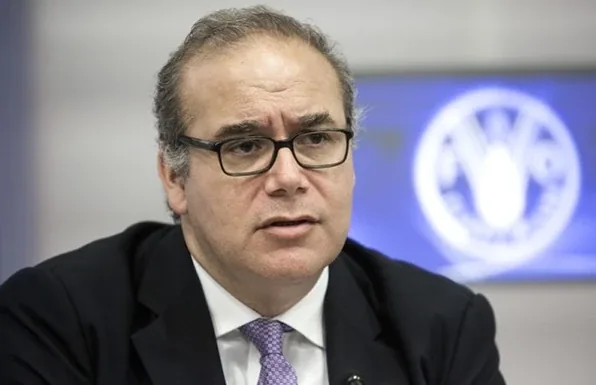
Máximo Torero, Chief Economist of the Food and Agriculture Organization of the United Nations.