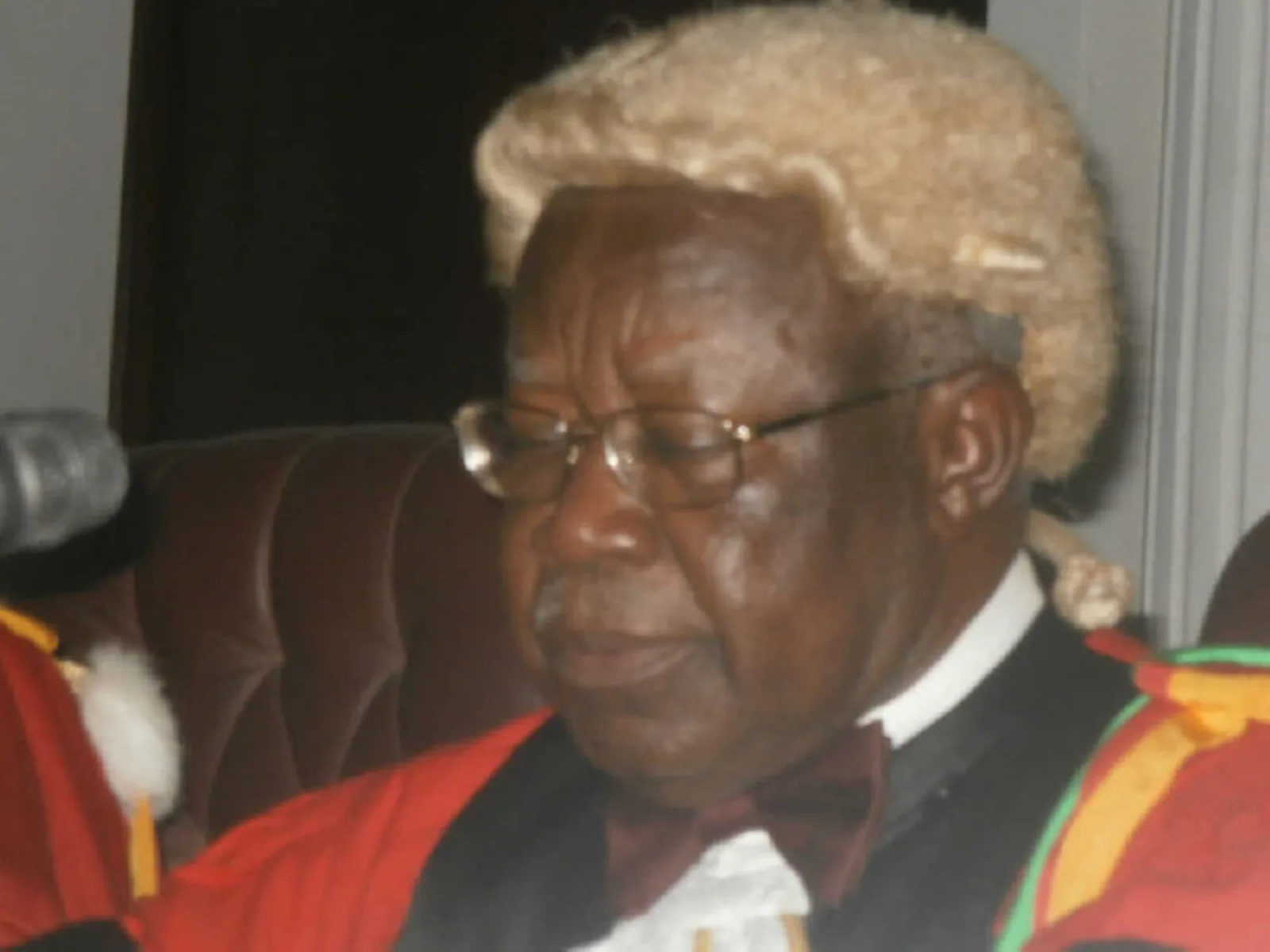
The former first president of the Supreme Court of Cameroon passed away on May 4, 2026.
Alexis Dipanda Mouelle has died. The emblematic figure of Cameroonian justice leaves the scene at the age of 84. He had been retired and out of the courts since 2015 after spending most of his time serving the justice system of Cameroon. Listed among the most remarkable personalities of Cameroonian justice since the 1990s, Alexis Dipanda Mouelle left a legacy considered full for a judge of his rank.
Read more Ghost centers and empty accounts: local taxation on the brink of institutional bankruptcy
Born on March 25, 1942, in Bonakou Bwapaki near Dibombari in the Littoral region, Alexis Dipanda Mouelle followed a school and academic path in Cameroon until obtaining his law degree before flying to Europe. He obtained a Diploma of Advanced Studies in judicial studies at the University of Paris. Returning to Cameroon, he joined the magistracy in 1965, an entry that also opened a long career in judicial administration. Among other positions, he was Attorney General at the Court of Appeal of the Littoral, Secretary General of the Ministry of Justice in 1980, and Attorney General at the Supreme Court in 1986. In 1990, he was appointed first president of the Supreme Court, replacing Jean Remy Mbaya. This was in a major political context marked by the return of multiparty politics carried by the winds of freedom. He held the position until December 2014 when he was replaced by the current president Daniel Mekobe Sone.
Read more Mobile microcredit: CEMAC switches to instant financing
For 24 years at the head of the highest court in Cameroon in civil, administrative, and account judgment matters, Alexis Dipanda Mouelle also experienced political cases related to legislative elections or successive presidential elections. He was at the helm in 1992 during the proclamation of the presidential election results, results contested by the late chairman Ni John Fru Ndi. His voice also conveyed to the Cameroonian people the victories of President Paul Biya in 1997, 2004, and 2011 before the Constitutional Council created in 1996 was put into service.