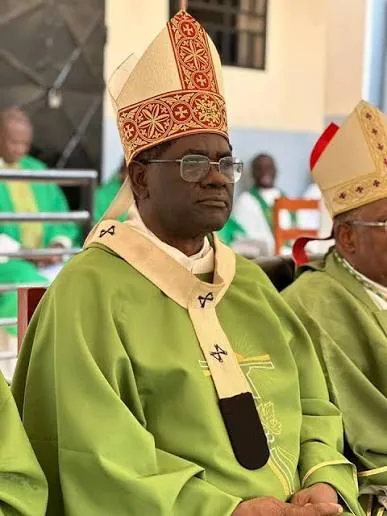
Behind the hushed walls of the Catholic institution, doctoral students denounce an opaque system, worthless degrees, and millions swallowed up. Despite the calls for action, the silence of the Archdiocese of Yaoundé intrigues and outrages.
In Yaoundé, the INUCASTY affair is no longer a simple administrative dispute. It is taking on the appearance of a major scandal, mixing institutional opacity, dubious academic promises, and the deafening silence of ecclesiastical authorities. At the center of the storm: the Archdiocese of Yaoundé, accused of covering up or at the very least tolerating a system that has plunged dozens of doctoral students into an academic and financial impasse.
Read more Cameroon: end of a historic parliamentary session at the National Assembly
A doctoral school without a legal basis
The facts are nonetheless damning. Doctoral students enrolled at the Sainte-Thérèse Catholic University Institute of Yaoundé (INUCASTY), second cohort, claim to have been enrolled in a doctoral program lacking legal authorization.
At the heart of the scheme is an agreement signed on May 31, 2023, in Paris between INUCASTY and a partner named Institut Sorbonne International (ISI). According to the documents consulted, this agreement is null and void: neither of the two entities had the required authorizations, either in France or in Cameroon, to issue doctoral degrees, whether research or professional.
Even more serious, the professional doctorate, implicitly presented to students, is formally prohibited in Cameroon by the law of July 25, 2023, on higher education.
The students denounce a deliberate strategy of concealment. In the official brochure given to doctoral students, no clear mention specified the exact nature of the degree offered.
“If we had known it was a professional doctorate and therefore without legal recognition, we would never have enrolled,” confides a member of the collective.
This ambiguity, far from being trivial, allegedly allowed the establishment to launch two consecutive academic years (2023-2024 and 2024-2025), attracting students ready to invest several million CFA francs.
Millions swallowed up
The damage is colossal. Some doctoral students claim to have paid up to 3 million FCFA for their first year. To date, only a minority have reportedly been reimbursed, often on the condition of providing strict supporting documents.
However, an official note from the Minister of State, Minister of Higher Education, dated July 31, 2025, is unequivocal: the professional doctorate program is suspended and fees must be fully reimbursed to students who request it.
In practice, the complainants denounce a manifest failure to comply with this instruction. Worse, some mention “fallacious” arguments put forward by the administration to delay or refuse reimbursements, notably the existence of an alleged deadline for claims.
An imposed and inequitable transfer
Faced with the crisis, a partial solution was proposed: the transfer of students to the Catholic University of Central Africa (UCAC). But here again, difficulties are mounting.
Only the faculty of management sciences is open to the doctoral students concerned, de facto excluding those from other disciplines such as law, political science, or economics. As a result, some of the students find themselves without a viable academic solution, despite the sums already committed.
Beyond the legal aspects, this case raises a fundamental question: that of the moral responsibility of the ecclesiastical institution.
How could a structure claiming Christian ethics allow such a system to flourish? Why were the commitments made to the students, notably during the July 2025 meetings, not respected?
The doctoral students’ collective speaks of “aggravated fraud” and “breach of trust,” terms heavy with meaning that reflect the extent of the malaise.
Read more Cameroon: Vice-President or Constitutional Successor?
Silence as a strategy?
Faced with these accusations, the Archdiocese of Yaoundé is retreating into silence. A posture that raises questions, even concerns. For in a case of this gravity, the lack of reaction can be perceived as a form of denial or worse, passive complicity.
The students, for their part, do not intend to leave it at that. They demand the strict application of ministerial instructions, the full reimbursement of the costs incurred, and recognition of the damage suffered.
A revealing crisis
The INUCASTY case goes beyond a simple academic dispute. It highlights the possible abuses in an environment where the trust placed in religious institutions can be instrumentalized.
In Yaoundé, one thing is now certain: the credibility of denominational higher education is seriously shaken. And without a rapid and transparent response from the authorities concerned, the scandal could well leave lasting marks.
Our various attempts to reach the officials of the Archdiocese of Yaoundé have remained unsuccessful.
Read more FECAFOOT and Red Cross: an alliance serving the health of footballers