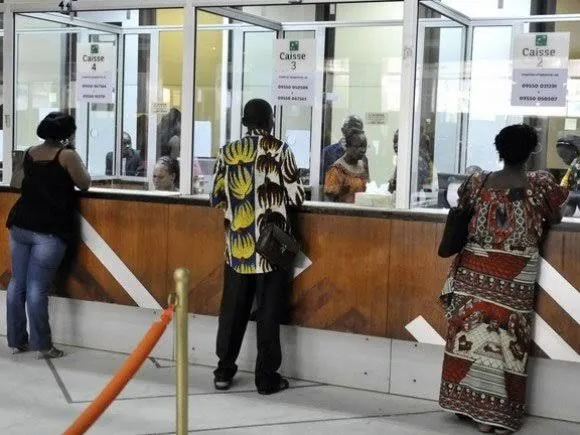
With 18.05 million manual withdrawals in 2024, an average of 24,144 operations per counter, and an average amount of 962,961 FCFA, the use of cash continues to grow (+0.77% in volume, +1.36% in value), despite efforts to modernize payments.
Despite the stated ambitions to transition to electronic payment methods, cash retains a dominant place in financial habits in the CEMAC zone. According to the latest report from the Bank of Central African States, “cash withdrawals remain one of the most widespread payment services,” illustrating the persistence of an economy heavily dependent on cash.
In 2024, commercial banks and microfinance institutions recorded approximately 18.05 million manual withdrawals at counters. These operations, carried out by both individuals and businesses, reflect a still massive reliance on traditional channels. Each counter processed an average of 24,144 operations over the year, with an average withdrawal amount reaching 962,961 FCFA.
These indicators are slightly up compared to 2023, with an increase of 0.77% in number and 1.36% in value. A moderate dynamic, but indicative of a fundamental trend: “despite efforts to promote the digitalization of payments, cash continues to remain predominant,” notes the BEAC.
Faced with this observation, the monetary institution strengthens its advocacy for scriptural payments. As part of its strategy, it actively encourages initiatives aimed at limiting the use of cash. This orientation is also framed by community regulations: the December 21, 2018 regulation requires the use of a scriptural payment method for any transaction exceeding 500,000 FCFA.
However, on the ground, the transition to dematerialized payments still faces structural realities: low banking penetration, unequal access to digital infrastructures, and the weight of habits. These are challenges that CEMAC will have to overcome to sustainably reverse the cash curve.
Read more Official exams: school principals warned against any premature disclosure of test materials