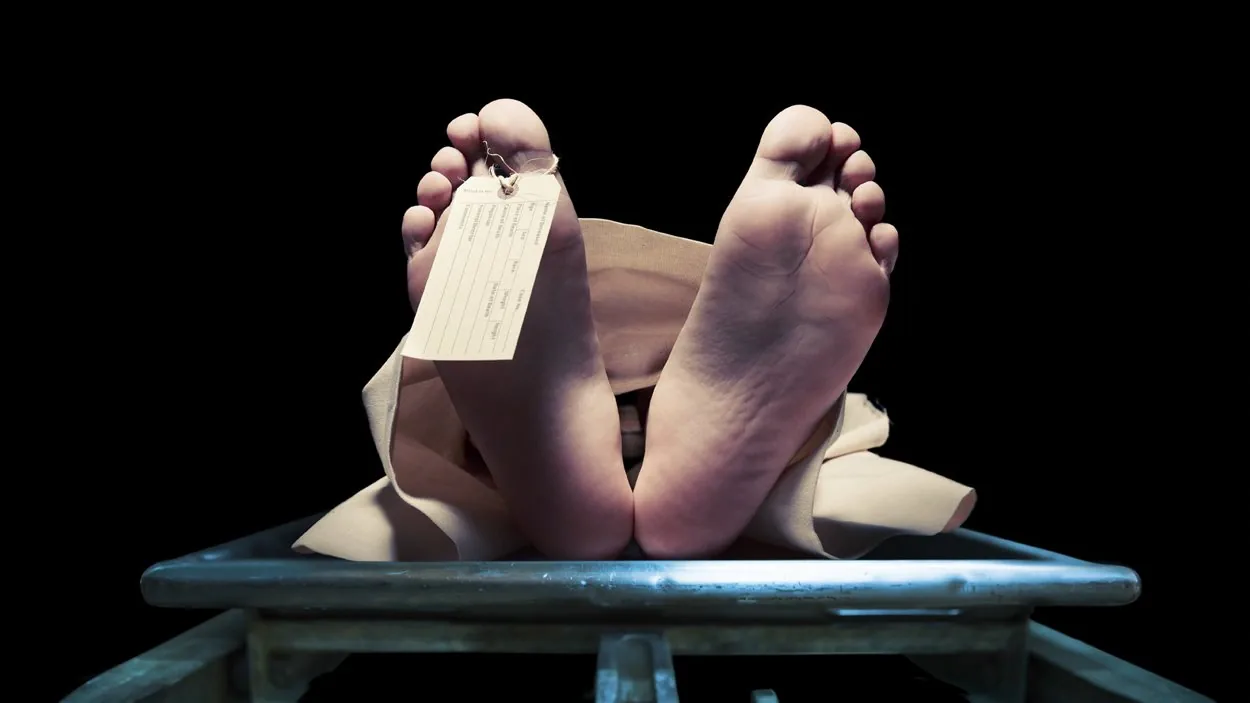
Health facilities located in the heart of the country’s major cities are regularly faced with dozens of unclaimed bodies by families. A situation that complicates the management of reception and storage capacities and leads to many risks.
Dead bodies can stay for a long time in hospital cold rooms without any owner coming forward. In Douala, Yaoundé, or Bafoussam, the recurrence of the situation is problematic. In a statement made public on July 7, the management of Yaoundé General Hospital reported the presence of 80 unclaimed bodies in the hospital morgue. Some are identified and others are not.
Read more Climate and health: ONACC focuses on content creators
They come from different neighborhoods and were mostly brought to the morgue by gendarmerie brigades, hospital stretcher-bearers, town halls, and police stations. The hospital director urges families to come to the morgue to identify the persons whose names are listed. Otherwise, the bodies will be handed over to the Yaoundé Urban Community for burial.
Meanwhile, whatever the outcome, it should be noted that the situation does not only concern the morgue of the Central Hospital of Yaoundé. In Bafoussam in the West region, the authorities buried 42 unclaimed bodies in a mass grave on April 16, 2025. The burial followed a final communication from the Bafoussam Regional Hospital which gave families 10 days to come identify and retrieve 28 bodies, some of which had spent about seven years in the morgue.
Read more Noise nuisances in Douala: the city hall intensifies awareness and enforcement operations
The hospital director, Dr. Jean-Marie Ndjip, explained then that the morgue of his health facility has a specific capacity. Frequent power outages made the odors unbearable and the service impractical. According to him, the hospital had to be freed. The director’s explanation thus sheds light on the consequences of abandoning bodies in morgues.
Their accumulation reduces storage space, increases electricity consumption, and exposes the living to health risks. The phenomenon, caused both by the precarious situation of some families and the irresponsibility of some individuals, also has financial consequences on health facilities. Bodies require preservation and maintenance but the resulting costs are paid by no one.
Read more Maritime transport: Douala at the heart of the consultation of African shippers