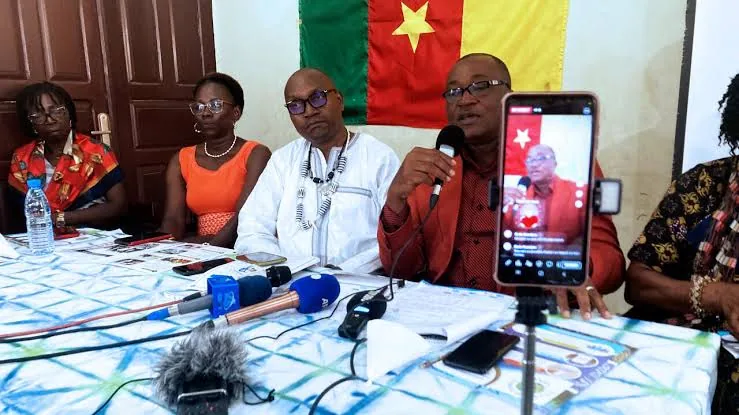
Driven by the momentum generated by the visit of the sovereign pontiff, Cameroonian civil society organizations are calling for the urgent opening of an inclusive dialogue to end the Anglophone crisis, denouncing a decade of missed opportunities and persistent violence.
Pope Leo XIV’s visit to Cameroon, from April 15 to 18, 2026, continues to resonate as a turning point. In Bamenda, before a crowd marked by years of conflict, the gesture of peace doves and the call for sincere dialogue rekindled a long-suppressed expectation. “This message must not go unanswered,” insist civil society organizations gathered within the Civil Action 237 platform.
Read more Fuels: the State caught between explosive subsidies and social anger
Their statement comes in an alarming context. A report published a few days earlier reported 136 credible incidents of human rights violations in 2025 in the North-West and South-West regions. Violence has taken root there, fueled by a war economy and systemic impunity. Women, children, and civilians pay the heaviest price, while movement restrictions and abuses become commonplace.
For these organizations, the conclusion is unambiguous: “A strictly security-based response cannot sustainably resolve the crisis.” They recall having, as early as 2017, advocated for direct dialogue with stakeholders. The Grand National Dialogue of 2019, deemed incomplete, failed to address the root causes of the conflict, particularly due to the absence of key actors and credible monitoring mechanisms.
International mediation attempts, notably led by Switzerland and Canada, fueled hope that quickly dissipated after their unilateral interruption. “These missed opportunities have prolonged suffering and reinforced the feeling of a superficial treatment of the crisis,” they denounce.
Today, civil society formulates a clear demand: the immediate opening of a direct, inclusive, and structured dialogue. This should integrate all sensitivities from secession to unity, include detained leaders, benefit from independent facilitation, and address fundamental issues without taboo, including the form of the State. It also advocates for active involvement of NGOs, international observation, and the establishment of a transitional justice process.
Beyond the numbers, the organizations recall the human reality of the conflict: broken families, children deprived of a future, communities plunged into fear. “To refuse the normalization of this violence is to refuse that the future be built on silence,” they insist.
In this appeal, the papal visit appears as a rare opportunity. It is now up to the authorities to transform the symbolic momentum into political action. “They knew how to organize. Let them now demonstrate their ability to listen and act for peace,” concludes civil society.
Read more The Ambassador of Algeria received in audience at the National Assembly of Cameroon