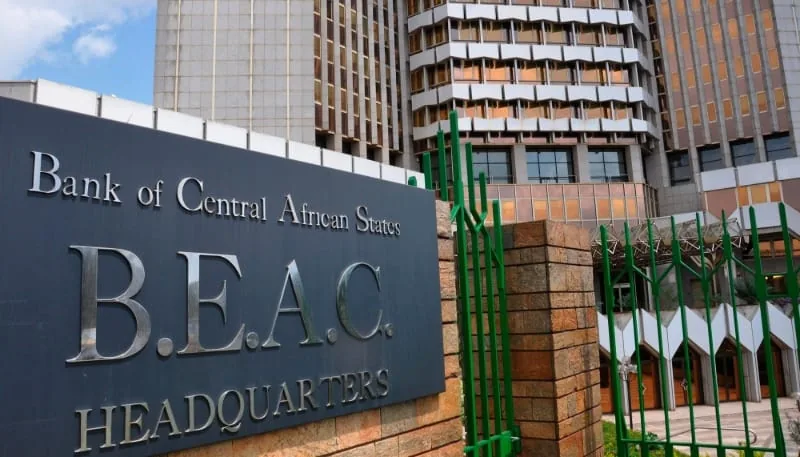
Driven by digitalization and the rise of Mobile Money, the CEMAC reaches a milestone in 2024. But behind the growth in usage, the reality of financial inclusion remains more nuanced.
The digital transformation of financial services is accelerating in Central Africa. In 2024, the Economic and Monetary Community of Central Africa (CEMAC) recorded a notable increase in its payment systems, confirming a profound shift in economic habits. According to the Bank of Central African States, the sector shows strong performance, driven by innovation and increased competition among players.
By the end of 2024, the sub-region had 502 payment service providers, totaling more than 56.47 million accounts. A significant increase, fueled notably by the popularization of Mobile Money solutions. Nearly 9 million new accounts were opened in one year, thanks to increasingly accessible and interoperable banking applications.
Read more Official exams: school principals warned against any premature disclosure of test materials
Now, the same phone number can be used to manage multiple accounts with different operators, blurring the traditional boundaries between banks and telecoms.
However, this expansion should not be overinterpreted. The number of accounts (compared to 45 million in 2023) does not mechanically reflect an equivalent increase in the number of banked users, as some clients hold multiple accounts.
In terms of transactions, the dynamic remains robust. The total volume reached 3.92 billion operations, for a cumulative value of 182,962 billion CFA francs. This represents an increase of 5.76% in volume and 6.38% in value year-on-year. Growth driven by the digitalization of public services, the commercial offensive of providers, and the structuring role of fintechs, which have become key partners in the ecosystem.
The offer has also diversified: microcredits via Mobile Money, tax payments, direct international transfers… all services that strengthen the attractiveness of electronic payments. At the same time, improvements in customer service and cost reductions have favored adoption.
But the pace is slowing. The introduction of taxes on scriptural payments in several CEMAC countries has slowed the momentum observed in previous years.
Finally, the landscape of payment instruments remains dominated by Mobile Money, which accounts for 94.34% of transactions. Bank cards and traditional transfers struggle to compete, confirming a lasting shift towards dematerialized solutions.
Read more Cameroon: 44 Francophone countries gathered in Yaoundé for the 61st session on educational reforms