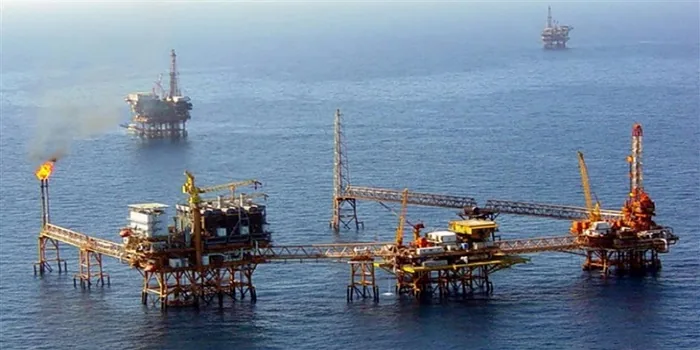
Between rising revenues and a heavier energy bill, Cameroon is bearing the full brunt of the paradoxes of a volatile oil market.
Cameroon alone illustrates the paradox of a country that is both a crude oil producer and dependent on imports of refined products. A situation that exposes public finances to sometimes contradictory upheavals. According to the Ministry of Finance of Cameroon, “the oil shock acts as a double-edged sword,” boosting revenues while increasing expenditures.
Read more Fuels: the State caught between explosive subsidies and social anger
Driven by the post-Covid recovery, hydrocarbon exports jumped by 48.4% in 2021 to reach 1,223 billion FCFA, compared to 824 billion a year earlier. The surge in world prices, amplified by the Russian-Ukrainian conflict, then propelled these revenues to 2,147 billion in 2022, a spectacular increase of 75.6%. But this dynamic has run out of steam: over the last three years, exports have gradually declined to 1,056 billion in 2025.
In the wake of this volatility, oil tax revenues have followed a sawtooth trajectory. Royalties peaked at 774.5 billion in 2022, compared to 409 billion in 2021, before falling back to 622.8 billion in 2023 and then 530 billion in 2024. Corporate tax on oil companies also increased, reaching 254.2 billion in 2023, compared to only 73.2 billion two years earlier.
But this windfall is largely offset by a growing energy bill. Between 2020 and 2023, imports of fuels and lubricants more than doubled, from 529 billion to 1,128 billion. Despite a slight expected decline to 788 billion in 2025, due to easing international prices, the imbalance persists.
Read more The Ambassador of Algeria received in audience at the National Assembly of Cameroon
“This dependence on imports of refined products limits the positive impact of price increases,” the ministry emphasizes. Clearly, each surge in crude oil enriches the coffers through exports, but simultaneously increases the cost of domestic supply.
Ultimately, oil appears less as a stable rent than as a factor of budgetary instability. A complex equation for the authorities, who are called upon to accelerate local transformation to capture more value and cushion external shocks.
Read more China donates food valued at 1.6 billion FCFA to Cameroon