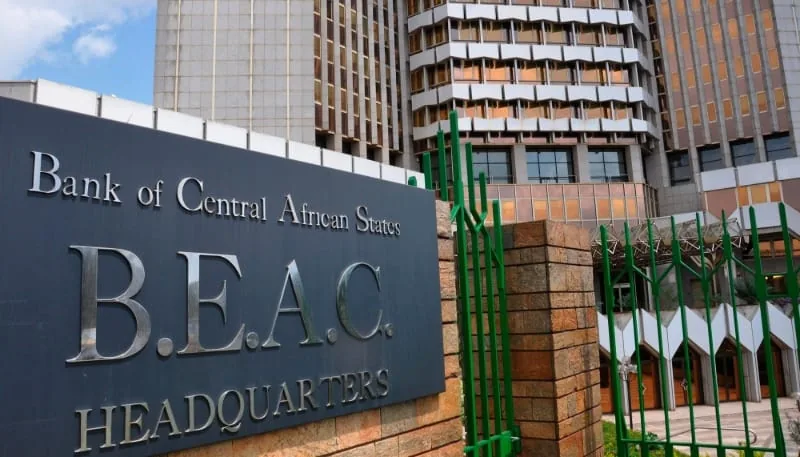
Meeting in Yaoundé, the Monetary Policy Committee anticipates an economic slowdown against a backdrop of global energy tensions.
BEAC has revised its outlook for Cemac. At the end of the first 2026 session of its Monetary Policy Committee, held on April 2 in Yaoundé, the institution is projecting growth of 2.9% next year, compared to the 3.5% expected in 2025.
This slowdown is part of an uncertain international context, marked by renewed tensions in the Middle East and high oil price volatility. Since the end of February, prices have jumped by about 40%, a shock with ambivalent effects for the sub-region’s economies.
While producing countries Cameroon, Congo, Gabon, Chad, and Equatorial Guinea benefit from increased export revenues, their dependence on imports of refined products limits these gains. The rise in the energy bill weighs on public finances and increases the risk of payment arrears, which could slow down private investment.
Furthermore, the rising cost of fuel fuels inflationary pressures through transport and production costs. Inflation is thus expected to be 2.3% in 2026, a level nevertheless below the community threshold of 3%.
On the monetary front, the situation remains under control. Foreign exchange reserves are expected to reach 4.52 months of imports, strengthening external stability. Despite solid fundamentals, Cemac remains exposed to energy shocks and fiscal imbalances.
Read more Cameroon: the official anthem of the visit of Pope Leo XIV