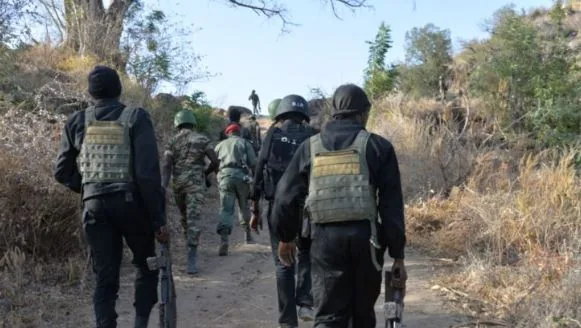
The geopolitics review has just published a quantified human toll of the crisis shaking the North-West and South-West regions in Cameroon.
10 years after the start of the security crisis in the North-West and South-West regions, the human toll is worrying. The hostilities between the defense and security forces and separatist fighters have already caused 6,000 deaths, all Cameroonians, hundreds of thousands of displaced persons including 80,000 who have taken refuge in Nigeria. About 648,000 people have scattered to other areas of the country, says the Conflits review.
Read more Industrial zones: MAGZI threatens to terminate leases of debtor companies
The publication also counts 2,000 political prisoners since the beginning of the crisis. Citing the non-governmental organization International Crisis Group, the review also recalls that the same crisis deprives 600,000 students of schooling in the affected regions. An area where schools have operated precariously or remained closed in recent years. Added to this are entire villages reduced to ashes.
The conflict has its roots in the colonial period when France and Great Britain were given the mandate to administer Cameroon. Each power imposing its different system from the other left its part of the country anchored in specificities favoring claims for autonomy or independence in the Anglophone part. The self-proclaimed independence of “Ambazonia” in 2017 did not obtain international recognition nor did it affect the integrity of Cameroon’s territory protected by the State.
Read more Circular economy: Cameroon charts its green roadmap for 2035
According to the review, the violent repression of trade union demonstrations is at the origin of the worsening crisis behind which is a 43-year regime that rejects the logic of separation and maintains decentralization as a governance technique. Looking ahead, the review sees a dead-end crisis with about ten separatist groups that are not unanimous and the State “which refuses dialogue based on any autonomy or federalization.” Despite efforts already made for a return to peace, hostilities continue.
Read more Nigerian President Tinubu wins ruling party nomination for 2027 elections