A series of international investigations, including the recent report “Fueling Ecocide” (2025), sheds light on the opaque practices of oil juniors in Gabon. Between concealed environmental disasters, fatal accidents, and the recycling of controversial executives, the sector appears to be sinking into an unprecedented ethical drift in the country.
This is far from the first time observers have sounded the alarm in the country. Indeed, other investigations, including one conducted by the Gabonese state under the Bongo administration, have highlighted abuses and malfunctions within the oil industry.
Read also: Cameroon: Maurice Kamto is not a candidate in the legislative elections
During the golden age of oil production in Gabon, majors Shell and Total reigned supreme in the extraction of black gold. However, faced with dwindling reserves, these historical giants gradually withdrew, leaving the field open to “junior” companies. This shift marked the arrival of operators with methods often deemed less rigorous, whose internal operating methods have had critical repercussions on security, social, and environmental levels.
It is in this context that the Franco-British group Perenco has established itself as the country’s leading producer, making Gabon its most important subsidiary worldwide. However, this dominance is accompanied by an alarming track record: the company’s facilities have become the scene of recurring accidents. Between 2022 and 2023, several environmental disasters, some of which caused loss of life, tragically illustrated the fragility of the operator’s safety standards.
A Heavy Legacy of Accidents and Persistent Impunity
The chronicle of incidents related to Perenco’s activities in Gabon attests to a series of serious failures that have gone without a real judicial response. The Cap-Lopez terminal was one of the most striking examples, with the explosion of a storage tank leading to a massive spill of hydrocarbons in the immediate vicinity of the beaches of the economic capital. More tragically, the drama that occurred in March 2024 on the Bécune field cost the lives of at least six employees following an explosion during work on a well. Despite the scale of this disaster and the resulting marine pollution, the national authorities seemed to ignore both the accident and the cover-up strategy implemented by the company.
It was ultimately the British NGO Environmental Investigation Agency (EIA) that lifted the veil on these practices in the spring of 2025 through an exhaustive investigative report. This document highlights what observers now call the “Perenco culture”: operational management focused on excessive cost reduction and production maintained at all costs, often at the expense of the safety of property and people. The organization describes a system of social dumping, discriminatory treatment between local and expatriate employees, and institutionalized opacity through falsified reports and suspicions of active corruption of local authorities.
Testimonies collected by the EIA from former technicians are edifying in this regard. They report deliberately ignored safety protocols, the recurrent use of obsolete equipment, and the employment of unqualified labor for high-risk operations. The report also highlights brutal human resource management where competent employees reporting shortcomings are systematically sidelined in favor of more docile teams, thus entrenching a culture of generalized negligence within the group’s facilities.
Despite these revelations, the situation remains one of total impunity: no sanctions, no trials, and no official reports have been made public. Although three Perenco Gabon executives were briefly detained, EIA investigators report that they were released after the payment of illicit commissions. This disastrous human and ecological record was consolidated under the leadership of Benoit de la Fouchardière and Adrien Broche, benefiting at the time from the goodwill of the Minister of Petroleum, Massassa, who had even decorated Adrien Broche with the National Order of Merit in January 2023.
This protection also appears to be supported by regional influence networks. As the press highlighted in May 2025, Benoit de la Fouchardière benefits from the constant support of a close associate, a Cameroonian who shines within the African Energy Chamber, an organization to which Perenco is a generous donor and on whose board he sits. This system of favors between private interests and energy promotion bodies illustrates the difficulty of achieving real transparency in a sector where personal connections seem to take precedence over environmental and human responsibilities.
Read also: Cameroon: Maurice Kamto is not a candidate in the legislative elections
When the Perenco Culture Contaminates the Entire Industry
Perenco’s influence is not limited to its own oil fields; it appears to extend through a network of former executives who disseminate its management methods to other operators in the sector. Christophe Blanc’s career is a striking illustration of this. A former Perenco employee, he joined Maurel & Prom as general manager in Gabon, where his tenure was marked by intense social tensions, including a major strike in 2017 triggered by accusations of discriminatory behavior. Surprisingly, he was later reinstated by Perenco to resume general management in Gabon, succeeding Adrien Broche, illustrating a game of musical chairs where the same profiles circulate in a closed loop.
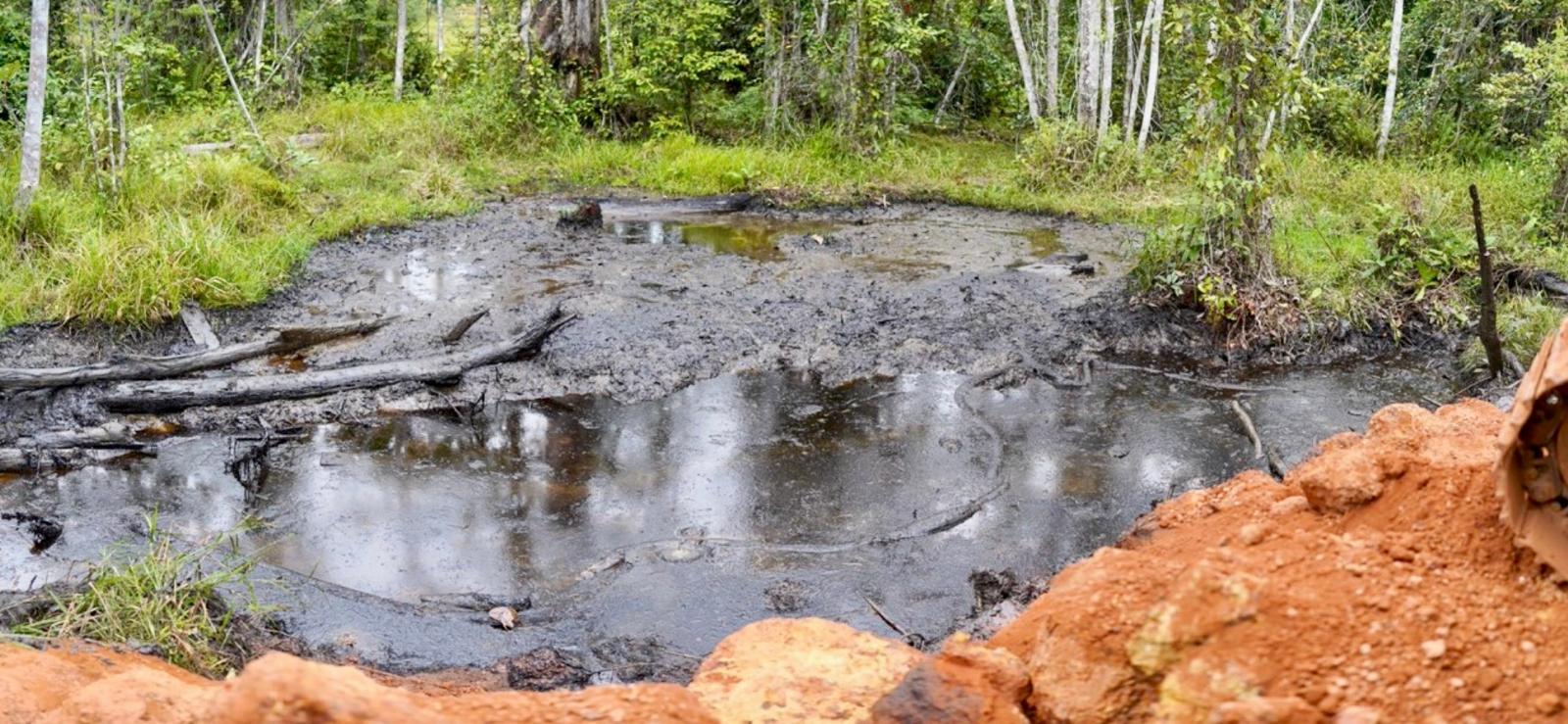
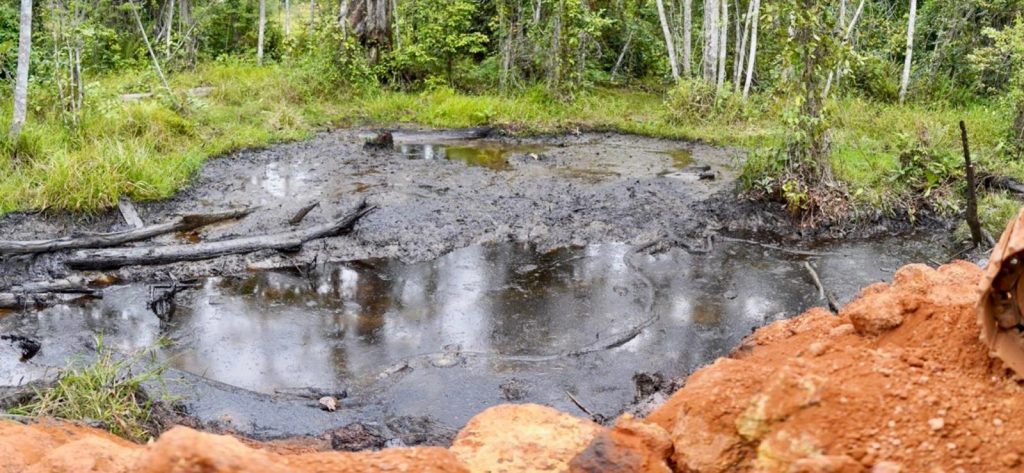
This operational culture also seems to have permeated the company Assala, now under the banner of Gabon Oil Company. A confidential report from the Directorate General of Environment and Nature Protection (DGEPN), dated October 2023, revealed Assala’s involvement in a concealed pollution scandal. Drone footage proved that company trucks were dumping pollutants directly into the forest. Despite a previous injunction for similar offenses less than a year earlier and the clarity of the evidence gathered, no concrete sanctions have been made public.
In parallel with these abuses, another major hydrocarbon pollution incident near Rabi, in a protected area home to forest elephants, was allegedly deliberately concealed from the authorities through backfilling operations at the time of the company’s sale. According to internal sources at Assala-GOC, this strategy of maximizing production in disregard of the environment was driven by an operational team then led by Jérôme Garcia, himself a former Perenco executive. He, supported by his colleagues Guillaume Vandystadt and Brice Morlot, is singled out for prioritizing immediate returns, in total contradiction with the company’s official environmental commitments.
The Guilty Silence of the Authorities
Despite the gravity of the investigations, the silence of the Gabonese authorities is questionable. To date, no public sanctions have been imposed, and no final report has been leaked. In the shadows, ministry inspectors report intense hierarchical pressure, receiving orders not to disrupt the “balance of the sector.” This administrative omerta has reportedly led, according to internal sources, to the closure of damning files.
Jérôme Garcia’s career appears, in this regard, to be a symbol of impunity inherited from Perenco’s methods: closed-door management, locked-down communication, and a frantic pursuit of production in disregard of ecological standards. From Latin America to Africa, his career seems marked by environmental damage. Testimonies gathered in Cameroon, Peru, and Guatemala paint a portrait of a leader operating outside international standards. The EIA report also points out that in Guatemala, under his leadership, Perenco’s activities were associated with massive deforestation and shady networks, leaving behind devastated and never-restored lands.
This deleterious influence continues to spread within the Gabonese sedimentary basin through loyal collaborators. This is the case of Brice Morlot, who, after following Jérôme Garcia to Perenco and then Assala, joined BW Offshore to manage operations on the Dussafu permit. This constant circulation of executives imbued with the same culture of secrecy raises a fundamental question about the state’s regulatory capacity. Faced with personal interests driven by the lure of profit, one can wonder when the state leadership will finally decide to break this vicious cycle to place environmental preservation and worker safety above immediate profits.
Article written with leconfidentiel.net