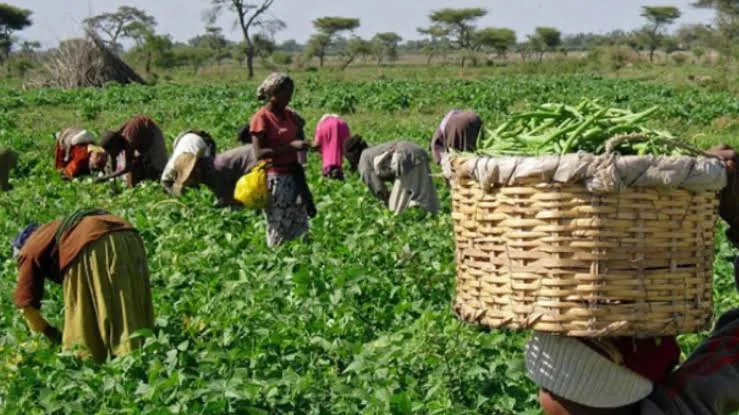
After a period of stagnation in the middle of the year, the primary sector is recovering in the third quarter of 2025. A still fragile recovery, supported by a few key branches, but hampered by the slowdown in subsistence agriculture.
The quarterly national accounts published by the National Institute of Statistics reveal that the primary sector recorded a slight recovery in the third quarter of 2025, with a progression of 0.8% quarter-on-quarter. This improvement comes after a period of contraction and is mainly based on the renewed activity in certain strategic sectors.
Leading the way, industrial and export agriculture rebounded sharply, showing growth of 6.5%, after a marked decline of 6.6% in the previous quarter. Silviculture and forestry also contributed to this dynamic, with an increase of 2.0%, erasing their previous contraction of 2.3%. These two segments, heavily exposed to external markets, are thus driving the sector’s recovery.
However, this improvement remains incomplete. Subsistence agriculture slowed sharply, its growth falling to 0.1% compared to 2.3% previously. Similarly, livestock, hunting, and fishing activities progressed more modestly, at 0.6% after 0.9%. These underperformances limit the extent of the overall recovery.
Year-on-year, the trend remains more concerning. The growth of the primary sector stands at only 0.2%, confirming a weakening that began in the previous quarter. While subsistence agriculture (+3.6%) and livestock, hunting, and fishing activities (+3.7%) continue to support activity, their dynamism is not enough to offset the 3.4% contraction in export agriculture.
In total, the primary sector’s contribution to real GDP growth remains marginal, at 0.1 percentage points. At the same time, the sectoral deflator reached 10.5%, a sign of persistent tensions on agricultural prices. Between sectoral recovery and inflationary pressures, the balance remains precarious.
Read more Cameroon: Mamadou Mota denounces the influence of politics and money on the Christian faith