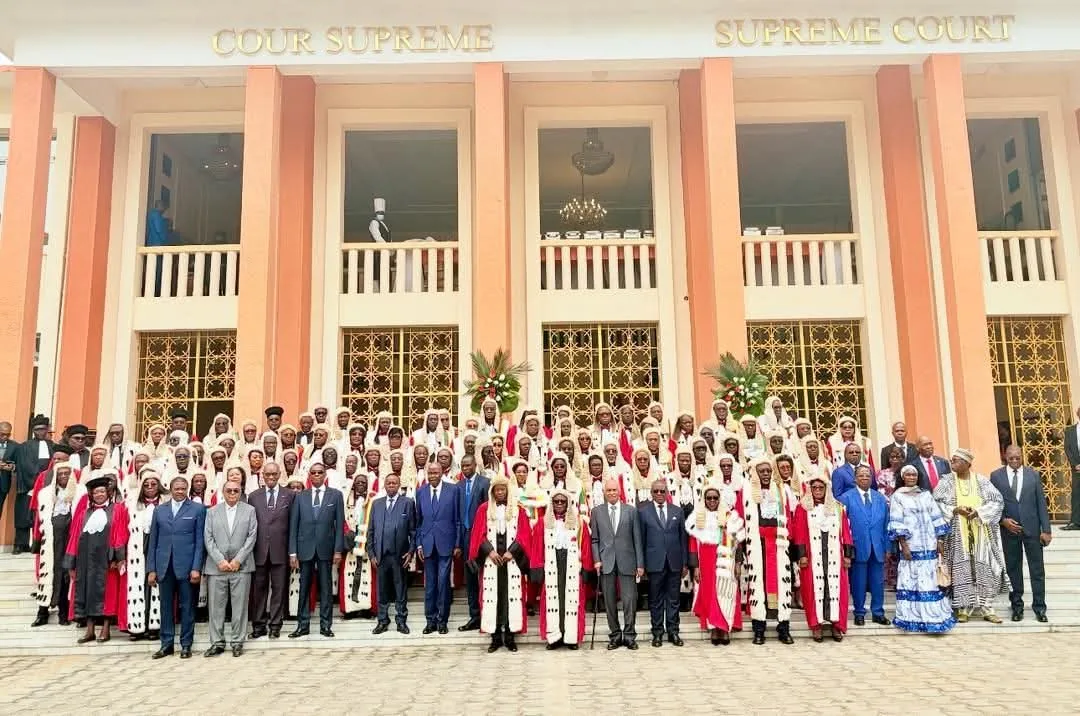
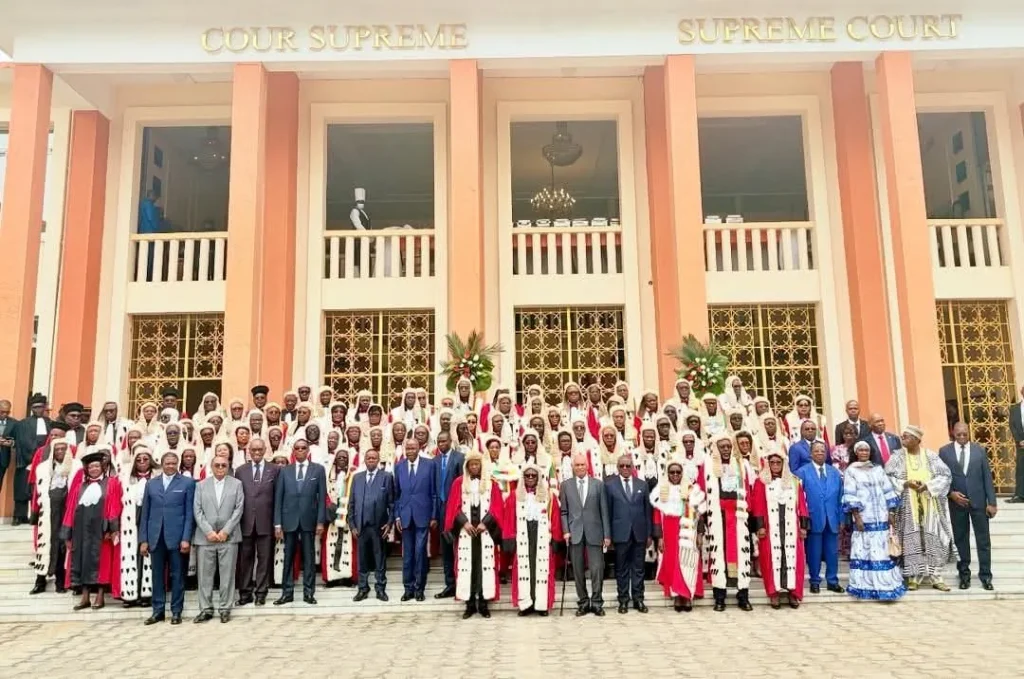
The president of the judicial chamber of the high court described these unhealthy practices during the judicial year opening ceremony on Wednesday, February 25, 2026.
A series of illegal and sometimes surprising practices show the degree of corruption that has taken root within the services responsible for land management in Cameroon. According to the Supreme Court’s denunciation, the services of the Ministry of State Property, Surveys and Land Tenure (Mindcaf) are characterized by numerous abuses relating to the granting or withdrawal of land titles, the application of relevant texts, expropriation for public utility, and many others.
Read more Cameroon: the Littoral Court of Appeal orders the restitution of Gabriel Kondo Ebelle’s property
Before the Prime Minister, in the presence of Mindcaf Henri Eyebe Ayissi, the President of the Judicial Chamber of the Supreme Court, Fonkwe Joseph Fongang, bluntly presented the abuse linked to the illegal withdrawal of land titles. According to him, we are witnessing a phenomenon where “a land title is withdrawn following an appeal, then restored a few days later, then withdrawn again, then restored a second time, withdrawn a third time, then restored a fourth time (…) One dares to believe that the Minister is being misled by his collaborators,” revealed the judge, questioning the objectivity of these withdrawals as well as the relevance of administrative acts carrying dubious decisions.
Further on, the Supreme Court points out other abuses, including those relating to the simple interpretation or application of regulations, highlighting the practices of the land registrar. According to the judge, the latter sometimes makes the decree say what it does not say. This is the case, for example, when a parent land title is withdrawn and the registrar “takes a note to extend this withdrawal to derived land titles.” The judge also does not forget the abuse in the administration’s management of expropriation for public utility.
Read more Oil and constitution: the refoundation according to Babissakana
In this regard, the Court recalls that the preamble to the Constitution, Article 545 of the Civil Code, and the law of July 4, 1985, and its implementing decrees establish and protect private property and regulate expropriation for public utility. But the judge also reveals that practices have created expropriation for private utility. However, the laws do not contain this form of expropriation. They recognize expropriation for public utility and provide for prior compensation. However, even this compensation is already a “sea serpent,” the judge denounces.
Read more Crimes of passion in Cameroon: the warning of a mental health expert