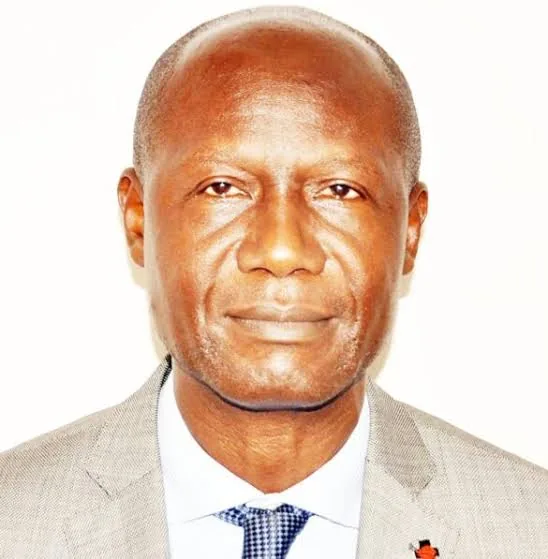
In a reform letter addressed to Issa Tchiroma Bakary, Babissakana, a financial engineer, places the oil audit at the foundation of the constitutional reform he deems indispensable for Cameroon.
As part of the political dynamics of the Union for Change 2025, he argues that two major commitments—the state audit and the federal option—are inseparable from a sustainable refoundation.
Read more Crimes of passion in Cameroon: the warning of a mental health expert
The author traces the country’s constitutional trajectory: the Constitution of March 4, 1960, for East Cameroon, the Federal Constitution of September 1, 1961, sealing the union with West Cameroon, then the revision of June 2, 1972, establishing the unitary state, before the amendments of 1996 and 2008. He recalls that the Federation guaranteed the federated states broad powers, particularly over natural resources, protected by Article 47, which prohibited any revision affecting federal integrity.
According to Babissakana, the discovery of oil in the Rio del Rey basin in the early 1970s constituted the decisive turning point. Exploration activities led by Elf-Serepca, followed by commercial discoveries at Betika (1972), Asoma (1973), and Kole (1974), reportedly strengthened the strategic interest in the resource. The referendum of May 20, 1972, officially presented as an instrument of national unity, allegedly allowed for the centralization of oil control at the top of the state. The creation of Sonara in 1973, then the National Hydrocarbons Corporation (SNH) in 1980, placed under the supervision of the presidency, consolidated this model.
The letter emphasizes governance issues. Drawing on academic work covering 1977-2006, Babissakana highlights the significant gap between estimated oil revenues and those actually recorded in the budget. He also mentions the “direct interventions” of the SNH outside the budgetary circuit, regularly flagged by international financial partners. For him, this structural opacity has prevented effective development planning and fueled institutional dependence around the presidency.
Read more Cameroon: at least five dead in a new Boko Haram attack in Bargaram
Consequently, the proposed audit should cover the entire oil chain, from the first permits to sharing contracts and recent financial flows. Three preliminary measures are proposed: removing the SNH from the presidency’s supervision in favor of technical and financial ministries; reviewing reporting mechanisms; and banning all off-budget public spending via the SNH.
Finally, Babissakana advocates for a return to a federal organization, which he considers more efficient than the current decentralized state. Based on subsidiarity, the autonomy of federated entities, and their participation in national decisions, federalism would, in his view, offer a framework better suited to the country’s diversity and transparent resource management. The oil audit would thus become, in his vision, the lever for an institutional and moral refoundation of Cameroon.
Read more Solemn Opening 2026: the Supreme Court examines the balance between public order and freedoms