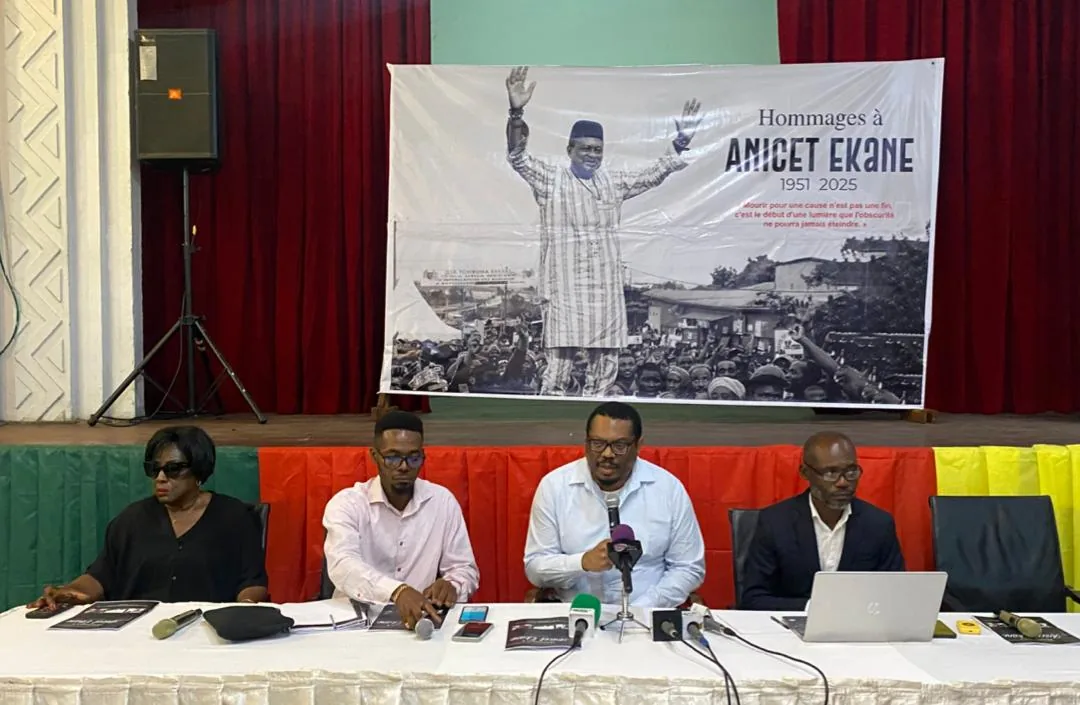
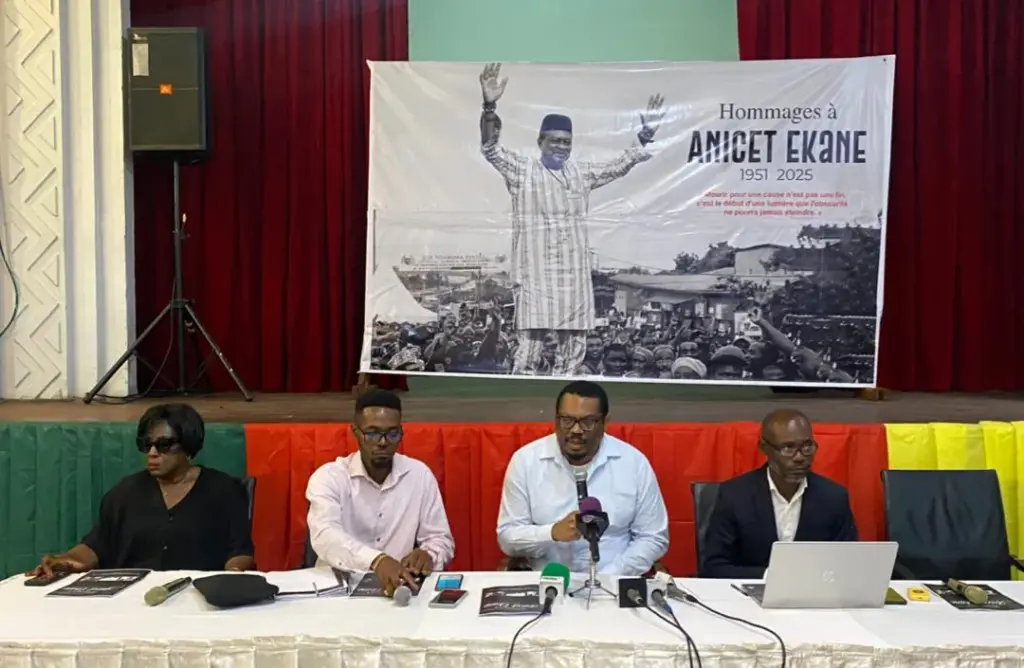
It was in a community hall in Akwa this Monday, May 4, 2026, filled with emotion and solemnity, that Dr. Muna Ékanè spoke before representatives of the press.
Son of the deceased, he was tasked with announcing the funeral program of his father, Anicet Ékanè, an iconic figure of the Cameroonian opposition, who died on December 1, 2025, under circumstances that the family and close associates continue to denounce. But before listing the dates and locations, Dr. Muna Ékanè first paid tribute to a father, a fighter, an entire chapter of Cameroon’s political history.
Read more Local taxation: the great political scam
Because the man taken away was not only taken from his family. In a solemn and clearly carefully prepared speech, Dr. Muna Ékanè recalled the conditions under which his father lost his life. Arbitrarily arrested on October 24, transferred bound and hooded, Anicet Ékanè is said to have died in the premises of the State Secretariat for Defense in Yaoundé, where he was held in conditions deemed unworthy. “Time seems to have stopped since the news broke,” he said, before emphasizing that the mourning affecting the Ékanè family is also that of an entire nation. For Dr. Muna Ékanè, his father was not a man of half-measures or easy compromises. He describes him as a rock, a moral and political compass who, even in the fiercest storms, always pointed to “the north of dignity and sovereignty.”
Forty years of public life without ever changing sides — that of the people — summarize, according to him, the essence of Anicet Ékanè. Drawing from the legacy of the Union of the Populations of Cameroon and the traces left by Ruben Um Nyobè, Félix Moumié, or Ernest Ouandié, Anicet Ékanè made political commitment a vocation, not a career. Through MANIDEM, he structured dissent as an educational tool serving the people, convinced that freedom is not given but seized through perseverance and education.
Four stages for a final tribute
After this heartfelt tribute, the son detailed the memorial program chosen by a multidisciplinary organizing committee, involving family patriarchs, political companions, and traditional authorities.
The funeral will take place in four stages. Starting Wednesday evening, May 6, 2026, at 7:30 p.m., the Akwa community hall will host a time of sharing and solidarity — official opening of the mourning, presentation of condolences, and collective reflection.
On Thursday, at the same place and time, a political tribute evening will celebrate the convictions and struggles of the deceased.
Read more Cameroon: Death of Alexis Dipanda Mouelle, former first president of the Supreme Court
On Friday, the procession will move to Bomono Gare for a cultural evening marked by traditions, songs, and local testimonies.
Saturday will mark the climax of the ceremonies. From 7:00 a.m., the coffin will be prepared at Laquintinie Hospital, followed by the body’s lifting. A solemn procession will then cross the streets of Douala before reaching Bomono Gare, where, from 11:00 a.m., funeral ceremonies and burial according to customs will take place.
Closing his speech, Dr. Muna Ékanè made a solemn appeal to the nation, transcending political, ethnic, and religious divides. He invited Cameroonians to mobilize not only to mourn but to bear witness and carry on his father’s legacy. Addressing the deceased directly, he concluded with barely contained emotion: “Dad, you fought the good fight. You never gave up. You leave us a paved path, a path of thorns but a path of light. Rest now, warrior of the spirit.”
Read more Ghost centers and empty accounts: local taxation on the brink of institutional bankruptcy