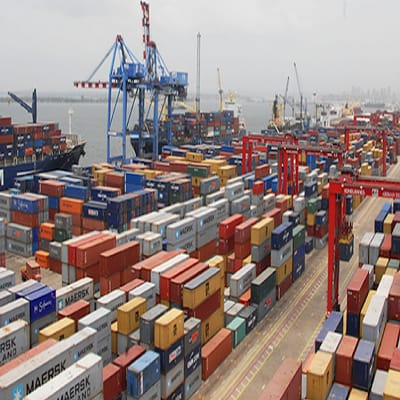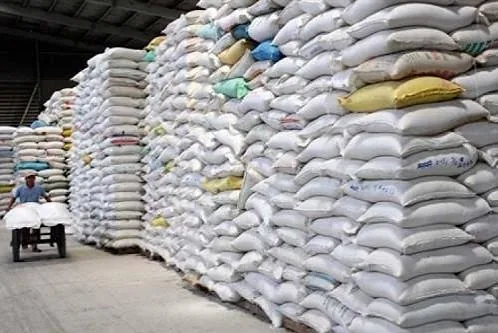
The decline in cereal purchases and the drop in export revenues reflect a progressive restructuring of foreign trade.
According to the National Institute of Statistics, in 2025, cereal imports contracted significantly to 466,9 billion FCFA, a decrease of 14,1% over one year. They now represent 8,9% of total import spending, confirming a downward trend that began in 2024.
In detail, rice still dominates the structure of foreign purchases, with a bill of 268,7 billion FCFA (5,1% of imports), down 15,6%. Wheat and meslin follow, at 187,8 billion FCFA, or 3,6% of the total, down 12,3%. Corn remains marginal, with 10,3 billion FCFA, representing barely 0,2% of imports.
This downward dynamic could reflect the first effects of food import-substitution policies promoted by the SND30, aimed at reducing external dependence.
At the same time, export revenues are stalling. They stood at 3 084,0 billion FCFA in 2025, down 5,2%, after an 8,8% increase in 2024. Since 2022, their irregular evolution illustrates the vulnerability of commercial performance to international market fluctuations.
Read more U.S. forces will begin blocking ships entering or leaving Iranian ports on Monday