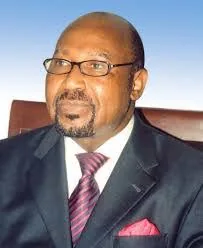
By defending the constitutional reform creating a vice-president position, Minister Benoît Ndong Soumhet invokes legality and democratic standards. But the opposition dismantles an argument judged “out of touch,” pointing out inconsistencies and unapplied laws.
Controversy is swelling around the constitutional revision project. On RFI, Minister Benoît Ndong Soumhet delivered an unnuanced defense of Head of State Paul Biya: “President Biya is a pure-blooded legalist. Everything he has done as a political act is in accordance with the law.” Relying on a theoretical reading, he even summons Max Weber to justify a “legal-rational legitimacy” embodied, according to him, by the reform.
Read more Cameroon: a resilient economy, but weakened by fiscal slippages
An argument that struggles to convince its detractors. In a scathing response, Roger Justin Noah, Secretary General of the MRC, accuses the minister of distorting legal reality: “Big brother, avoid dragging our department so low to protect your steak.” Behind the phrase, a series of specific grievances. The opponent recalls that the 2019 law on decentralization provides for the transfer of 15% of state revenue to local authorities, “a threshold never reached,” he asserts, mentioning figures peaking at 7%.
Another angle of attack: Article 66 of the Constitution on the declaration of assets. “The law has existed since 2006, but the implementing decree has never been signed,” he deplores, seeing it as proof of variable-geometry legalism. Same skepticism about the reform itself, whose compliance with Article 64 of the Constitution and the country’s international commitments he questions.
Read more Maurice Kamto launches a petition against the constitutional coup d’état in Cameroon
Beyond the texts, the opposition points to practices judged contrary to the spirit of the laws: the longevity of certain heads of public enterprises despite planned limitations, or the opaque management of strategic resources. “Is this what you call respecting the law?” Roger Justin Noah ironizes.
In this standoff, two visions are in direct opposition: that of a power claiming continuity and formal legality, and that of an opposition denouncing a gap between proclaimed norms and observed realities. At the heart of the debate, a persistent question: is legality enough to establish political legitimacy?
Read more Russia warns the Baltic states against opening their airspace to Ukrainian drones